Understanding the Core Differences Between Commercial and Residential HVAC Systems
When business owners in South Mountain Village consider HVAC inspection, they often approach it the same way homeowners do. This assumption can lead to costly mistakes. Commercial HVAC systems operate under fundamentally different parameters than residential units. South Mountain Village is located in Phoenix, AZ, where both residential and commercial properties face the same intense desert heat, yet their cooling infrastructure differs dramatically. Residential systems typically handle 1.5 to 5 tons of cooling capacity, while commercial installations range from 5 tons to over 100 tons depending on building size. On Time HVAC Phoenix serves South Mountain Village residents and business owners alike, and we've discovered that understanding these distinctions is crucial for proper maintenance and compliance. The equipment types differ too—rooftop units (RTUs), variable refrigerant flow (VRF) systems, and chiller plants dominate commercial properties, whereas split systems and window units serve most homes. These system differences demand specialized knowledge during inspection.
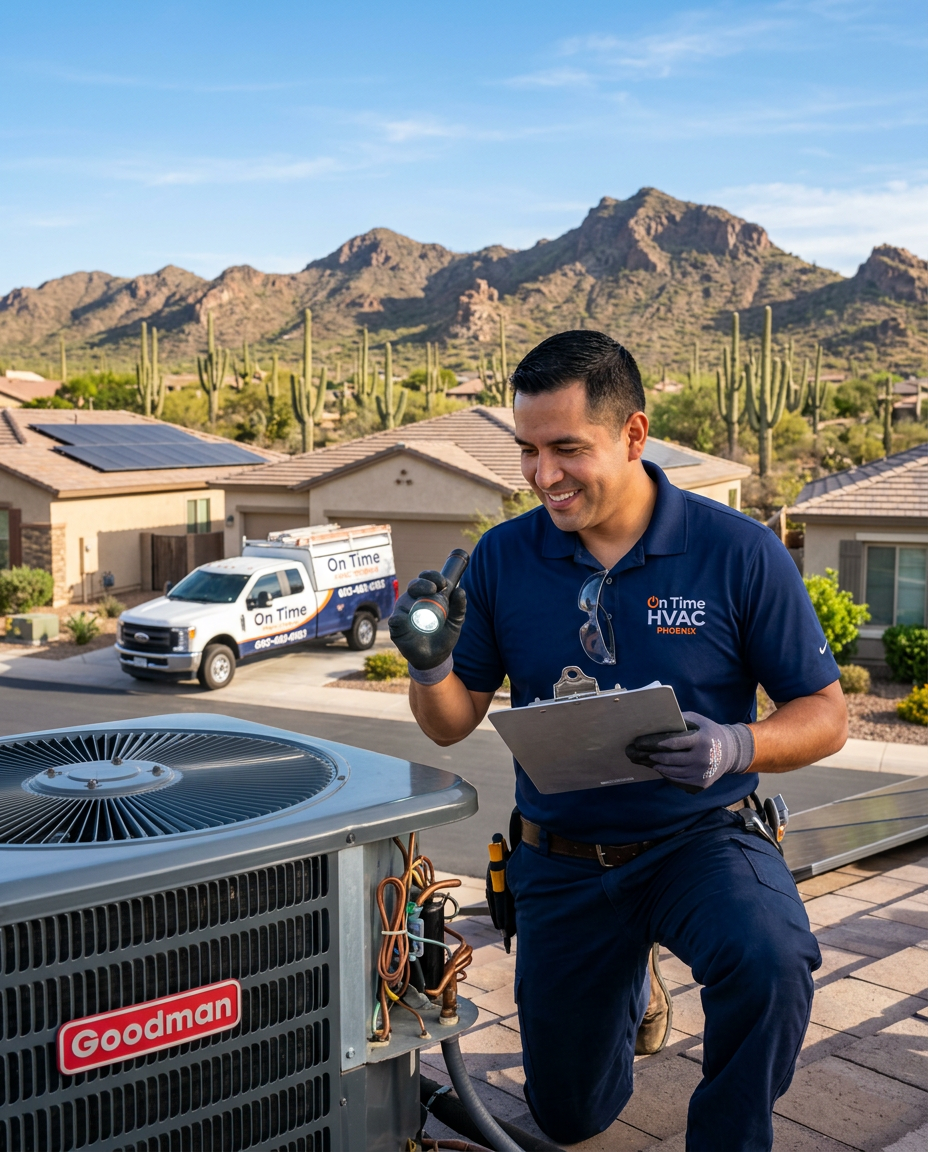 Professional HVAC Inspection services from 26 E Pima St, Phoenix experts
 Regulatory Requirements: Commercial Inspections Demand More Scrutiny
Commercial HVAC systems in South Mountain Village must comply with stricter codes than residential counterparts. The International Mechanical Code (IMC) and building automation system requirements apply specifically to commercial properties. On Time HVAC Phoenix provides HVAC Inspection in South Mountain Village with full knowledge of these commercial-specific regulations. Technicians performing commercial inspections must verify compliance with ASHRAE 62.1 standards for fresh air requirements, check fire dampers in ductwork, and inspect smoke detectors integrated into the system. Commercial properties also require planned maintenance agreements (PMAs) documented for insurance and liability purposes. Arizona's Registrar of Contractors (ROC) licensing requirements are identical, but commercial inspectors need additional expertise in building automation systems and chiller plant operation. Residential inspections follow the International Residential Code (IRC) with simpler requirements. The stakes are higher for commercial operators—system downtime directly impacts business revenue and tenant comfort.
Equipment Size and Complexity in Commercial Settings
Commercial HVAC equipment operates at scales that dwarf residential systems. A typical South Mountain Village home uses a 3-ton system; commercial buildings might require 20, 50, or even 100-ton installations. Rooftop units in commercial properties integrate with sophisticated controls, including variable-speed compressors using inverter technology that adjusts capacity for fluctuating loads throughout the day. These systems include economizers that pull outdoor air during mild weather, reducing compressor run time. Commercial ductwork uses heavier gauge sheet metal and requires more rigorous sealing to prevent the 20-30% air loss that plagues poorly maintained systems. Mountain Park Health Center Baseline Jesse Owens Clinic, located near South Mountain Village, represents the type of commercial property requiring specialized inspection protocols. The complexity means commercial inspections examine far more variables—static pressure readings across multiple zones, supply-air temperature differentials (typically 15-20°F for cooling), and compressor amp draw across multiple stages.
Cost Structures: Why Commercial Inspections Cost More
Business owners often ask how much an HVAC inspection costs, expecting residential pricing. Commercial inspections carry substantially higher price tags due to system complexity and time requirements. While residential diagnostic inspections typically range from $75 to $150, commercial HVAC inspections often cost $200 to $500 or more depending on system size and complexity. On Time HVAC Phoenix has established transparent, fair pricing for both residential and commercial clients throughout South Mountain Village, backed by 5-star Google reviews from satisfied customers. This cost difference reflects the extended diagnostic time required—commercial inspections involve superheat and subcooling measurements on multiple compressor stages, static pressure testing across zone dampers, temperature differential verification at multiple supply points, and amp draw measurements on both compressor and fan motors. Commercial refrigerant recharges cost more due to larger system volumes; R-410A recharges run $300-$600 for residential systems but $800-$2,000 for commercial units.
Commercial HVAC Projects Require Different Timelines
Commercial HVAC projects operate on different timelines than residential work. A residential system replacement might take 1-2 days; a commercial installation could require weeks of planning and phased implementation to avoid business interruption. Maintenance schedules also differ sharply. Residential homeowners benefit from annual tune-ups before cooling season (ideally March-April in Phoenix), while commercial properties require quarterly or monthly planned maintenance agreements to verify system reliability. The monsoon season (July-September) and extreme summer heat make commercial system availability critical in South Mountain Village. Commercial operators cannot tolerate downtime that residential homeowners might accept. On Time HVAC Phoenix understands that business continuity depends on proactive maintenance rather than reactive repair. Commercial systems also require more frequent filter changes—dusty desert environments demand monthly or bi-monthly replacement.
HVAC Inspection Prevents Equipment Failure and Revenue Loss
HVAC Inspection helps prevent catastrophic system failures that devastate commercial operations. For residential homeowners, a broken air conditioner means discomfort; for business owners, it means lost revenue and potential lease violations. South Mountain Village homeowners frequently need HVAC Inspection as part of responsible home maintenance, but commercial property managers need inspections as a business necessity. Early detection of refrigerant leaks, compressor bearing wear, capacitor degradation, and ductwork seal failure allows proactive repair before complete system shutdown. On Time HVAC Phoenix has served South Mountain Village for over 12 years, and we've seen businesses face thousands in both equipment replacement costs and operational disruption simply because they neglected annual inspections. A $300 annual commercial inspection prevents $5,000-$10,000 emergency compressor replacements. Preventive maintenance also extends equipment lifespan by 5-10 years, maximizing return on the $15,000-$40,000 commercial system investment.
Diagnostic Testing: Commercial Inspections Require Advanced Analysis
Commercial HVAC inspections involve diagnostic testing far more detailed than residential assessments. Technicians measure superheat and subcooling on both high-pressure and low-pressure refrigerant lines to verify the system operates within manufacturer specifications. Static pressure testing across ductwork determines whether blockages or filter restrictions reduce airflow. Temperature differential measurements at multiple supply points verify balanced air distribution. Amp draw testing on compressor motors identifies electrical stress that signals bearing wear. Professional technicians perform these complex diagnostics because improper testing misses critical issues.
https://louisteyq069.wpsuo.com/critical-safety-hazards-in-commercial-hvac-systems-what-phoenix-business-owners-must-knowChoosing Professional Commercial HVAC Inspection Services
South Mountain Village business owners require HVAC inspection specialists who understand commercial systems completely. Hiring a technician qualified only for residential work creates liability and compliance risk. On Time HVAC Phoenix employs licensed, bonded, and insured professionals with experience on commercial equipment across all major brands—Trane, Carrier, Daikin, Johnson Controls, and others. Our team holds EPA Section 608 certification for refrigerant handling and NATE certification validating technical expertise. We explain everything clearly, so business owners understand inspection findings and can make informed decisions about repairs or replacements. Fast response times and on-time service appointments minimize operational disruption. Professional commercial HVAC inspection protects your facility from downtime, verifies regulatory compliance, and maintains equipment efficiency across Phoenix's demanding climate. Visit https://ontimehvacphoenix.com/ to schedule your commercial HVAC inspection today.
Call 602-483-6183 for commercial HVAC Inspection in South Mountain Village "@context": "https://schema.org", "@type": "LocalBusiness", "name": "On Time HVAC Phoenix", "telephone": "602-483-6183", "address": "@type": "PostalAddress", "streetAddress": "26 E Pima St", "addressLocality": "Phoenix", "addressRegion": "AZ", "postalCode": "85003" , "url": "https://ontimehvacphoenix.com/", "areaServed": "South Mountain Village", "description": "Professional HVAC Inspection serving South Mountain Village in Phoenix, AZ.", "sameAs": ["https://www.facebook.com/OnTimeHVACPho/","https://www.instagram.com/ontimehvacpho/","https://www.youtube.com/@OnTimeHVACPho","https://www.linkedin.com/company/ontimehvacpho/","https://x.com/OnTimeHVACPho","https://www.tiktok.com/@ontimehvacpho","https://www.pinterest.com/OnTimeHVACPho/"], "image": "@type": "ImageObject", "url": "https://lh3.googleusercontent.com/d/1BFuFjjkTqtuRLJQClh9OyH_qJ0UVbtwv", "name": "Commercial vs Residential HVAC Inspection in South Mountain Village Service Image", "description": "Image for: How much does an HVAC inspection cost?", "encodingFormat": "image/png" , "audio": "@type": "AudioObject", "contentUrl": "https://drive.google.com/file/d/11nJNFnICg4dOSQn0PiVZQVBpmb5JtWgG/view", "name": "Commercial vs Residential HVAC Inspection in South Mountain Village Expert Audio", "description": "Audio answer to: How much does an HVAC inspection cost?", "encodingFormat": "audio/wav"